
Fall Lawn Care: What Your Lawn Needs Now for a Healthier Spring
After months of mowing, watering, and keeping your grass looking its best, it’s tempting to call it quits once cooler weather arrives. The mower comes out less often, leaves start falling, and your attention shifts to other things around the house.
But your lawn isn’t quite finished for the year.
In Southeast Wisconsin, grass can keep growing well into fall. That makes this a good time to tackle a few important lawn care tasks before winter sets in.
How Fall Lawn Care Sets the Stage for Spring
What you do for your lawn in the fall can make a big difference when spring rolls around. Problems that developed during summer don’t always disappear over winter. Addressing them while your grass is still growing can save you some work later.
Here are a few ways fall lawn care can help:
- Fertilization provides nutrients that support healthy, thicker grass.
- Aeration relieves compacted soil, so water and air can reach the roots more easily.
- Overseeding helps fill bare spots and create a fuller lawn.
- Weed control can help manage persistent weeds before the next growing season.
Of course, you don’t need to tackle every treatment on this list. What matters most is choosing the right care for your lawn and keeping up with the basics as the season winds down.
5 Fall Lawn Care Priorities for a Healthier Spring
As you’re getting your landscape ready for the colder months, it’s a good time to think about what your lawn needs before winter arrives. Not sure where to start? Here are five things to consider.
1. Start by Assessing Your Lawn’s Condition
Walk around your yard and take a closer look at your lawn. You might notice thin or bare patches, a few stubborn weeds, or areas that haven’t bounced back after summer.
Before reaching for fertilizer or grass seed, look for clues about what’s causing the problem.
Does water collect in certain spots after it rains?
Is the soil hard in areas where people frequently walk?
Maybe a large tree is keeping part of your lawn in the shade.
These details matter because different problems call for different solutions. For example, aeration may help with compacted soil, but it won’t fix poor drainage or a lack of sunlight.
You don’t need to solve every issue at once or pull every weed you see. Start by identifying the areas that need attention so you can make better decisions about what to tackle this fall.
2. Fertilize at the Right Time
Fall fertilization can help your grass develop thicker, healthier growth before winter.
 Nitrogen is one of the key nutrients in lawn fertilizer. It supports healthy turf growth and helps improve lawn density. And there’s an added benefit: thicker grass leaves less space for weeds to take hold.
The key is applying fertilizer at the right time. Wisconsin’s cool-season grasses can continue growing as temperatures cool, but that doesn’t mean any day before winter is a good day to fertilize.
For the best results, plan fall fertilization around your lawn’s growing conditions rather than waiting until the last minute.
3. Aerate Compacted Areas
Think about how much activity your yard sees throughout the year. Kids playing, pets running, and regular foot traffic can gradually press the soil together. This is especially common in lawns with heavy clay soil.
When the soil becomes compacted, water and air have a harder time reaching the grass roots.
Core aeration helps relieve that pressure by removing small plugs of soil. The openings allow water and air to move into the ground more easily. Aeration can also help manage thatch buildup and surface drainage.
Fall is a good time for this treatment in Southeast Wisconsin, especially when the soil is moist enough for the equipment to remove plugs effectively.
4. Overseed Thin Turf
If your lawn is looking a little sparse after summer, overseeding can help bring back a fuller, more even appearance.
Overseeding means spreading new grass seed over your existing lawn. But there’s more to it than tossing seed onto the grass and hoping for the best!
For new grass to establish, seeds need direct contact with the soil and steady moisture during germination. That means watering is especially important in the weeks after seeding. Knowing how to care for newly seeded grass can help give those seedlings a better start.
One thing to remember: new seed won’t solve every problem. If an area gets too little sunlight or stays wet because of poor drainage, those conditions may need attention before reseeding will be successful.
5. Continue Routine Lawn Maintenance
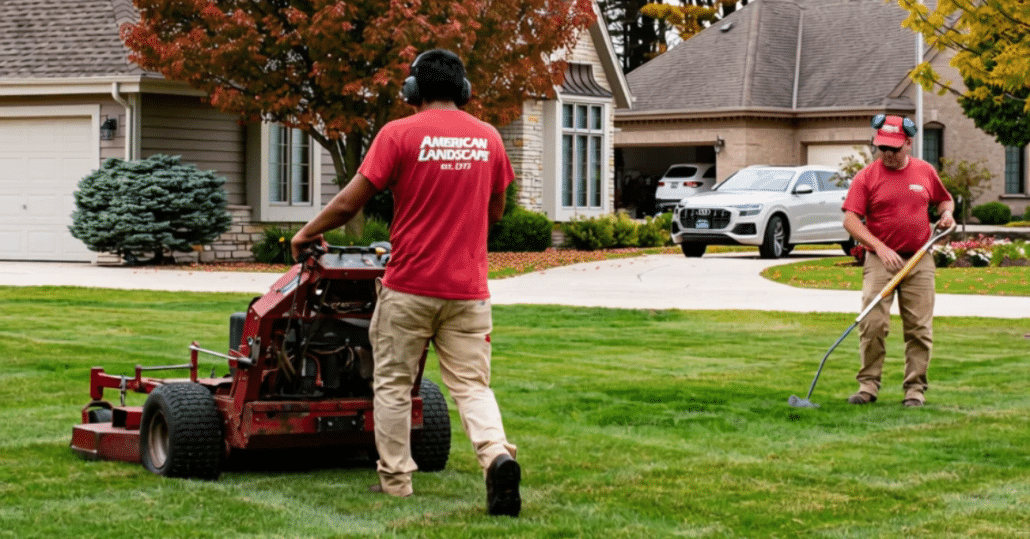
Don’t put the mower away just because the calendar says it’s fall! If your grass is still growing, it still needs mowing.
 Follow proper lawn mowing practices and stick to the one-third rule. That means cutting no more than one-third of the grass blade at a time. Avoid cutting your lawn extra short just to get one last mowing out of the way.
Falling leaves also need some attention. A light scattering isn’t a problem, but thick layers can block sunlight and smother the grass. Mulch leaves with your mower when possible, or rake up heavier piles before they become matted.
And keep an eye on the weather. Cooler temperatures don’t always mean your lawn is getting enough water. During long stretches without rain, check the soil and water when needed.
As growth slows and your lawn moves toward winter dormancy, you can gradually scale back your routine.
Fall Lawn Care with American Landscape
A little attention in the fall can make spring lawn care easier. But figuring out which treatments will help your property isn’t always straightforward.
At American Landscape, we help homeowners throughout Southeast Wisconsin care for their lawns through the changing seasons. Our professional lawn care services are designed to support healthy turf and address your lawn’s needs throughout the growing season.
Whether you’re looking for help with seasonal treatments or ongoing lawn maintenance, our team is here to help.
Contact American Landscape to discuss your lawn care needs and get a plan in place for the seasons ahead.