Landscape Design Services in Milwaukee

Creating a Rain Garden in Delafield, Wisconsin

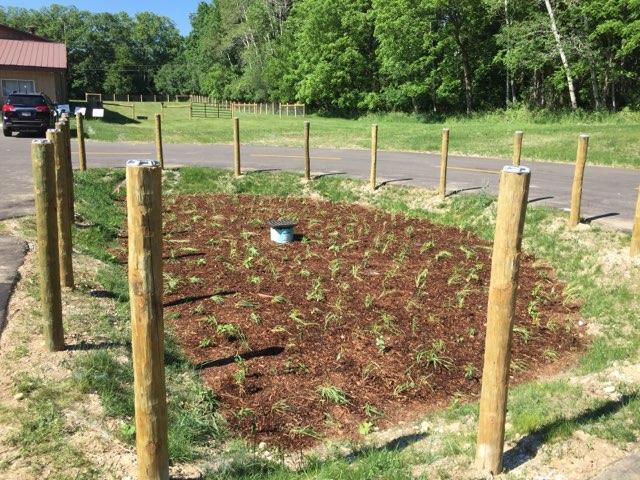
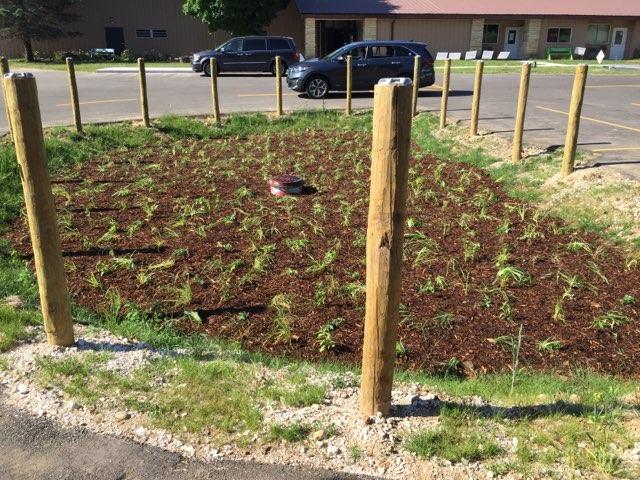
Earlier this year, we were happy to be a part of establishing a rain garden at a commercial property in Delafield, Wisconsin.

The purpose of the rain garden is to collect, absorb and filter run off from the parking lot.  A rain garden in this situation has specially engineered soil and filtration layers. Having the rain garden plants and filtration layers serves multiple functions:  

  • helps prevent contaminates from reaching our waterways
  • assists in preventing flooding and drainage problems
  • increases the amount of rainwater that filters directly into the ground
  • benefits our native wildlife because they are filled with native plants 

How a Rain Garden Works

A rain garden sits lower than the drainage pipe to allow as much water as possible to filter through the root systems of the plants and the filtration materials.  In the event of a substantial flood event, water would enter a traditional drainage overflow system to prevent flooding of the public space.  Rain gardens in the home landscape rarely require extra drainage systems as they do not need to filter runoff from a large paved surface. 

On this jobsite, the building contractor engineered and built the structure and American Landscape planted and established the gardens.  The builder constructed the areas for the gardens in fall, but since it was too late in the year to establish the small plants we planned on using, we waited until spring to get started.

Establishing Native Plants in the Rain Garden

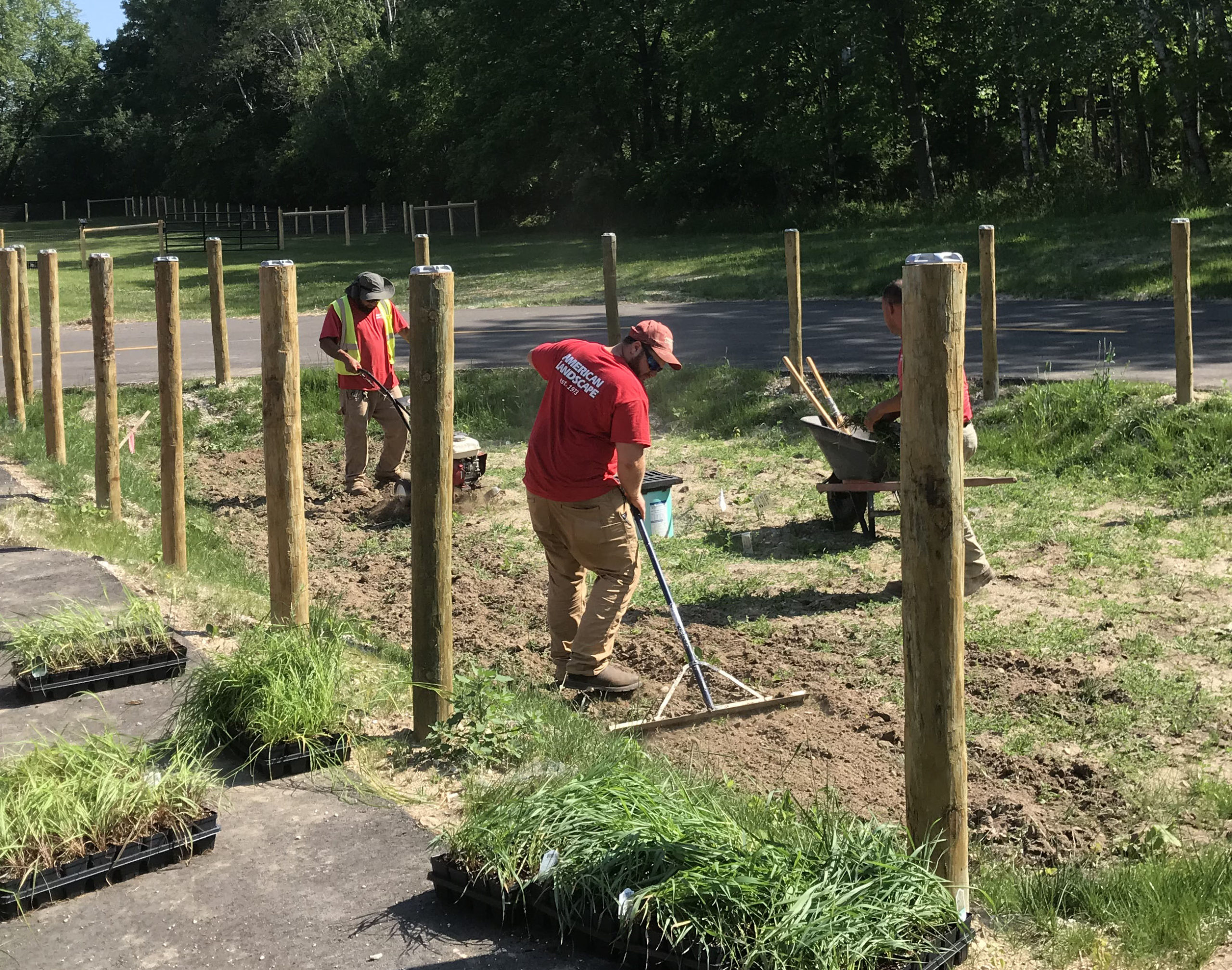
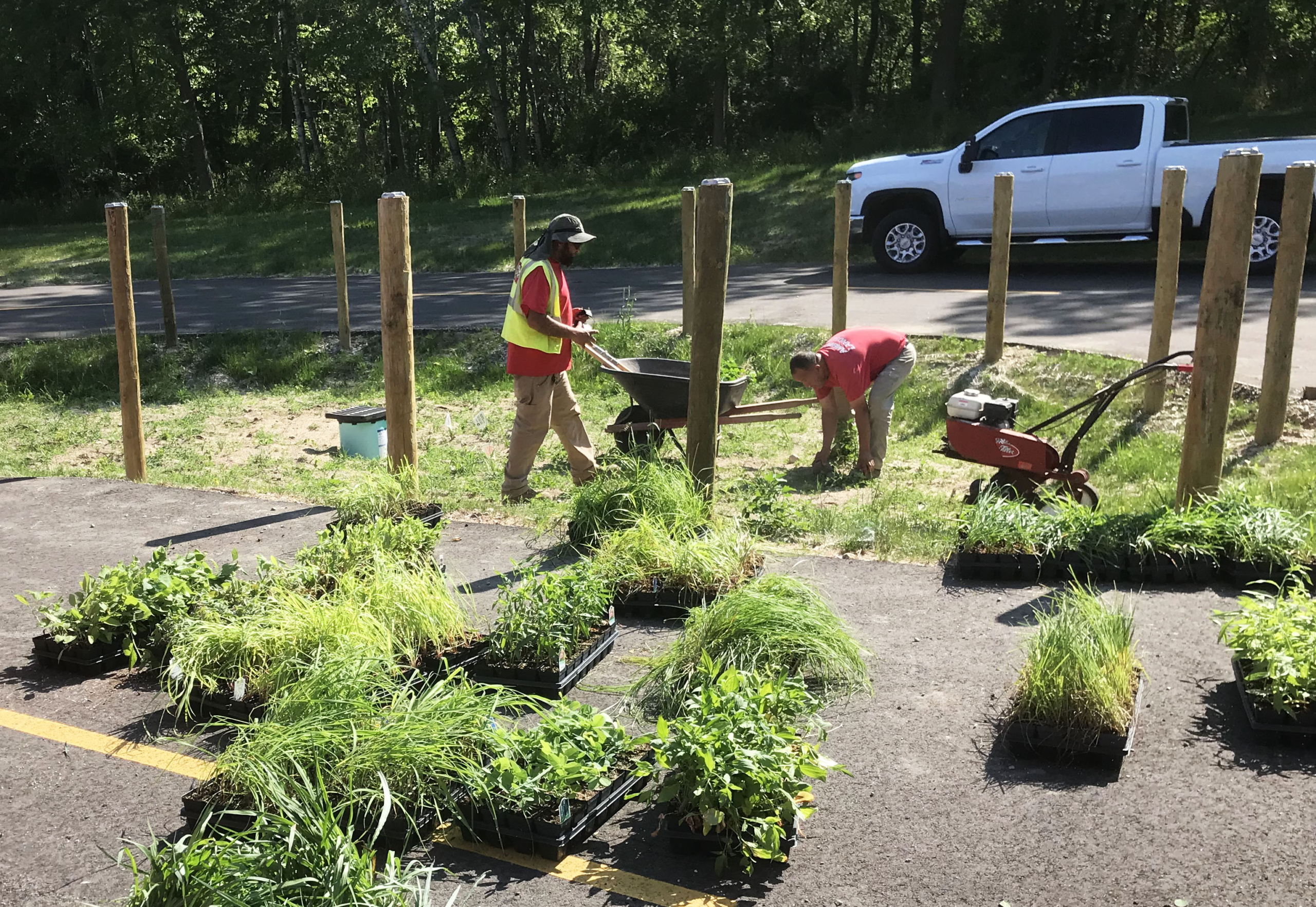
First, the crew prepared the area by removing any weeds and lightly tilling the surface, being careful not to damage any layers. 


We sorted the plants by variety and planted them in groupings to mimic the native environment.  A variety of native grasses, sedges and wildflowers were chosen based on their ability to tolerate varying moisture levels.  Over 700 native plants will be used between the 2 beds. You can find native plants that will work for your own rain garden plans here.


Plants will be watered regularly so that they can develop strong root systems, and weeds will be kept to a minimum to prevent competition as the young plants grow.

Once they are established the garden will require little care, other than monitoring for and removing invasive weeds, and some watering during times of drought.  As with any planting, a little maintenance will always be required, but the payback to the environment in this situation is well worth the effort.  

We were grateful for the opportunity to participate in such a project and look forward to future projects as more and more communities are starting to require environmentally sound storm water management practices.

If you’re interested in learning more about rain gardens you can go to this link provided by the Wisconsin DNR

https://dnr.wi.gov/topic/Stormwater/documents/RainGardenManual.pdf

Our designers have the expertise to work with you to create your own rain garden. Get in touch today to schedule a time to discuss your plans.

A Landscaping Makeover

Brookfield, Wisconsin


Our clients purchased this Brookfield, Wisconsin property because they were looking for a home more conducive to spending their golden years than their previous two-story home, which was located atop a large hill. This particular home struck their fancy, mainly for its unique configuration with a central courtyard in the back of the home. They have a special appreciation for the outdoors and landscape, and felt like the footprint afforded unique opportunities for strong visual and physical connections, as well as an uninterrupted flow from the interior to the outdoor living spaces.


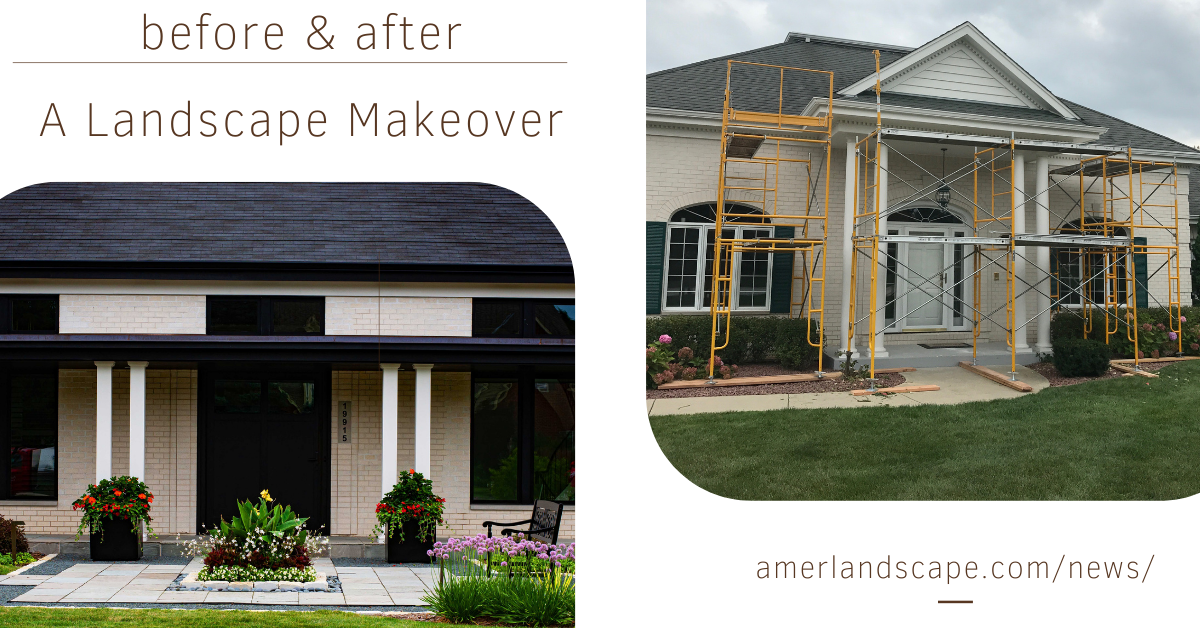
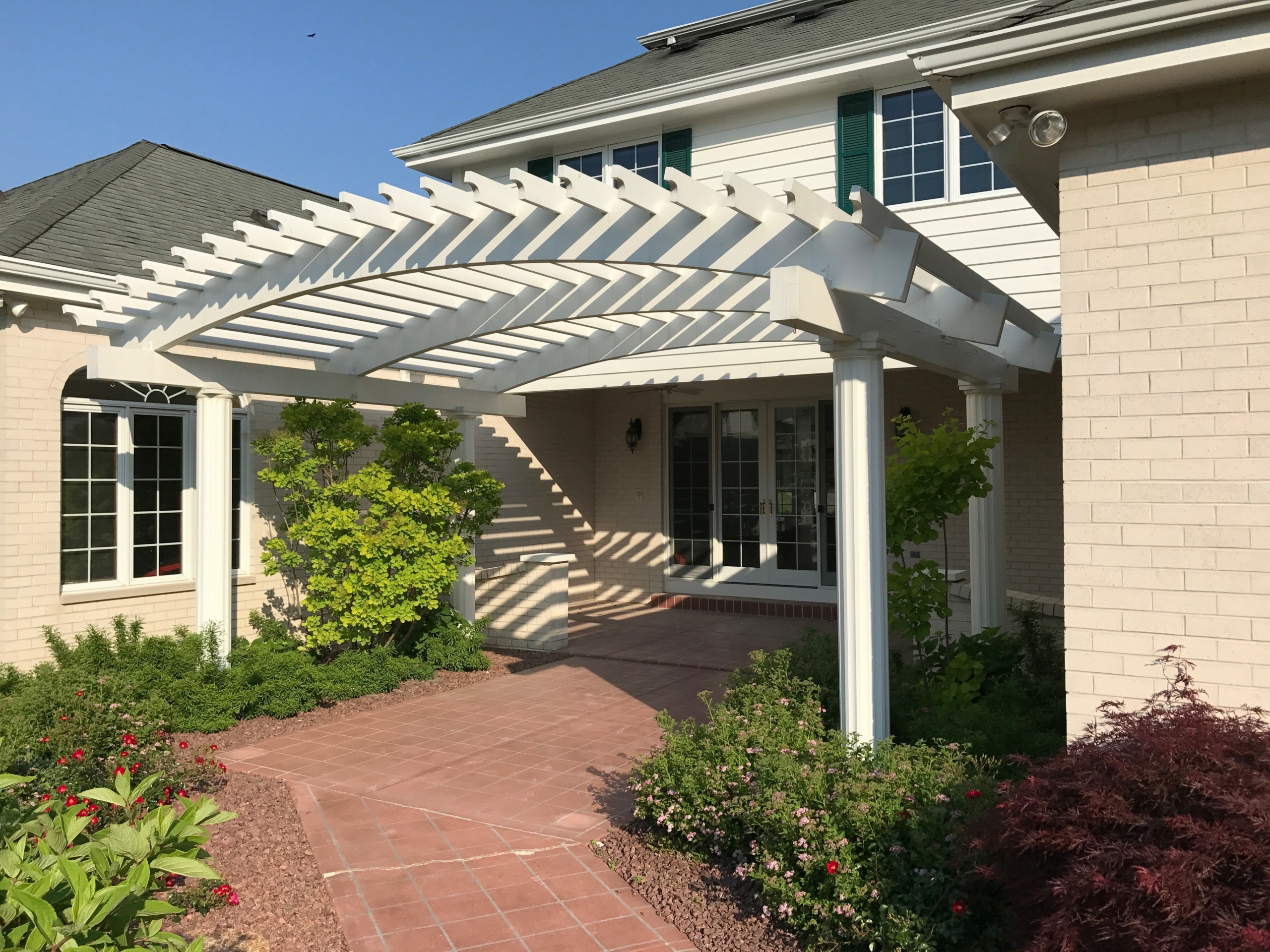
Front Entrance BEFORE


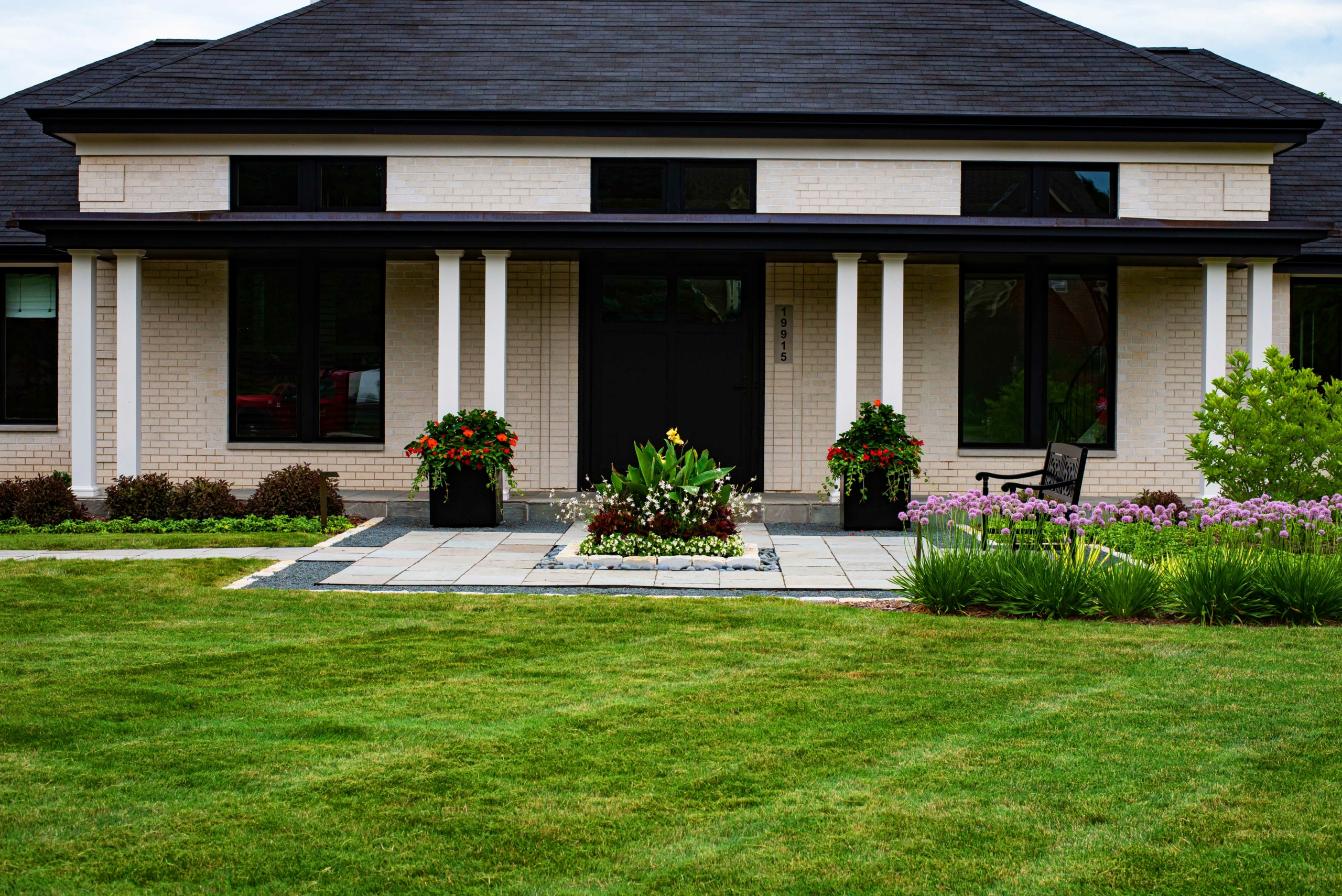
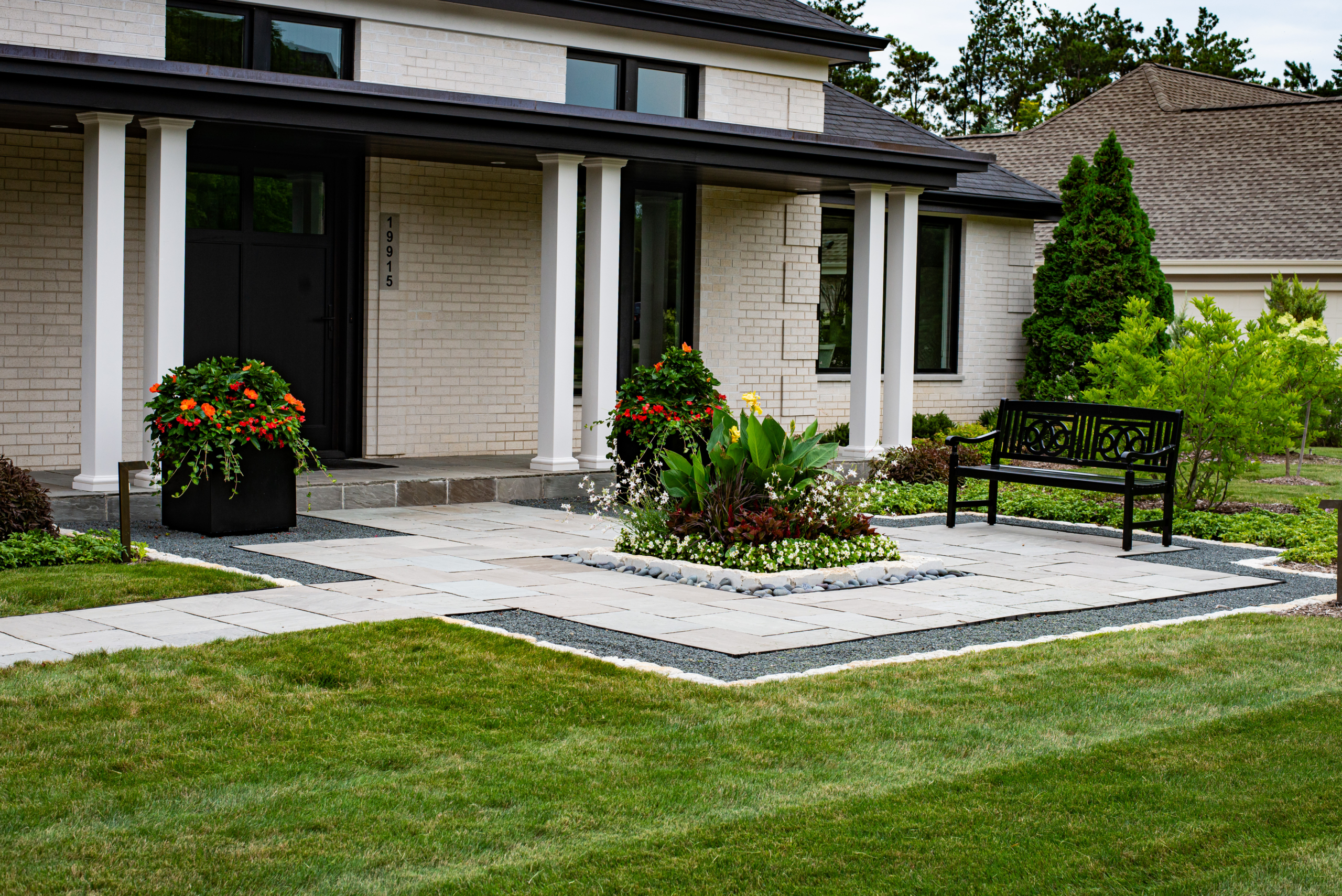
Front Entrance AFTER


With those goals in mind, the home was completely re-imagined both inside and out, in collaboration with an architectural team. Interior walls and functionality were reorganized to create an open concept and new opportunities for clear sight lines through the center of the home out to the landscape. Furthermore, the rear wall to the courtyard was replaced by floor-to-ceiling sliding glass panels – basically putting the courtyard space on center stage within the context of the building architecture.

Courtyard BEFORE


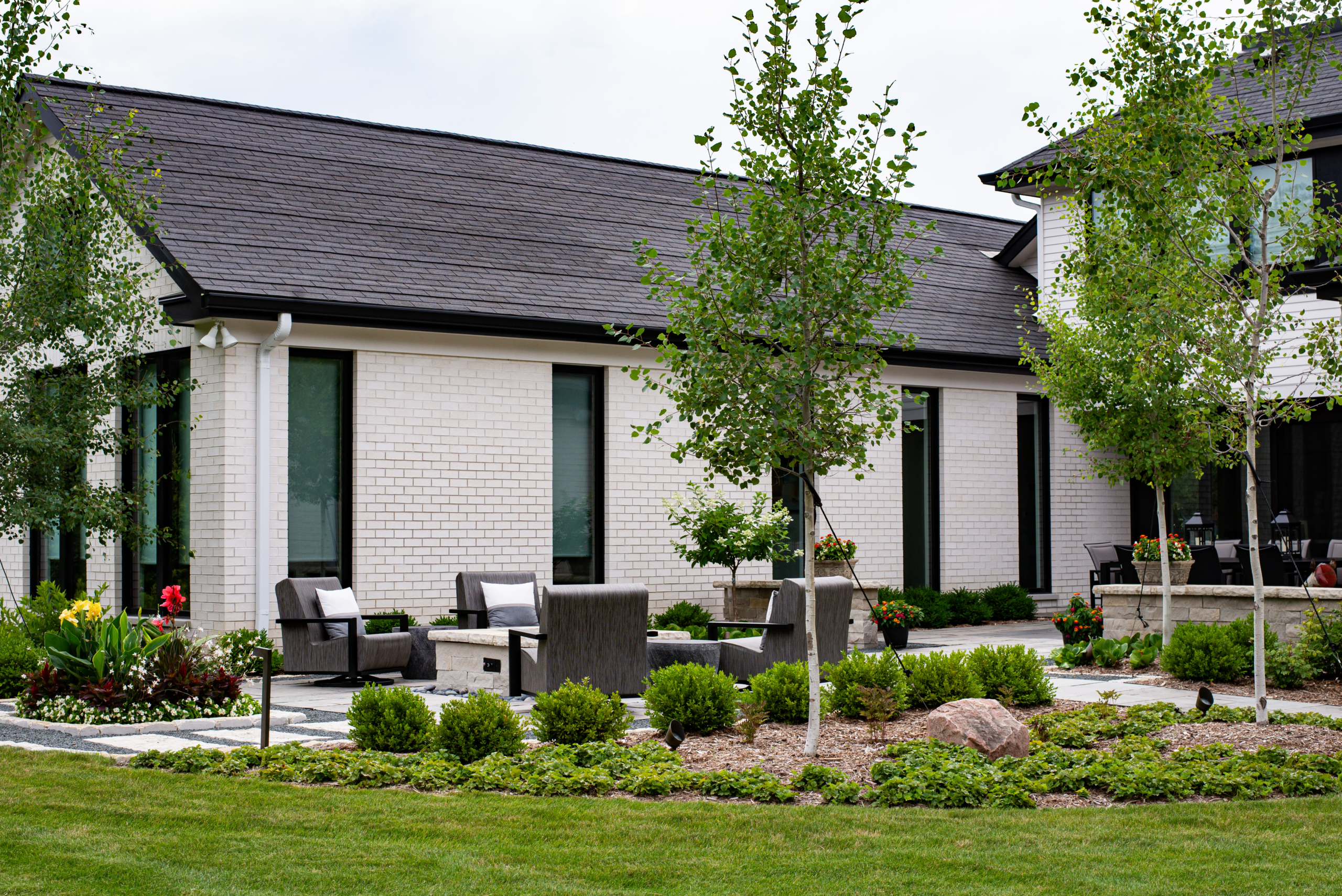
Courtyard AFTER


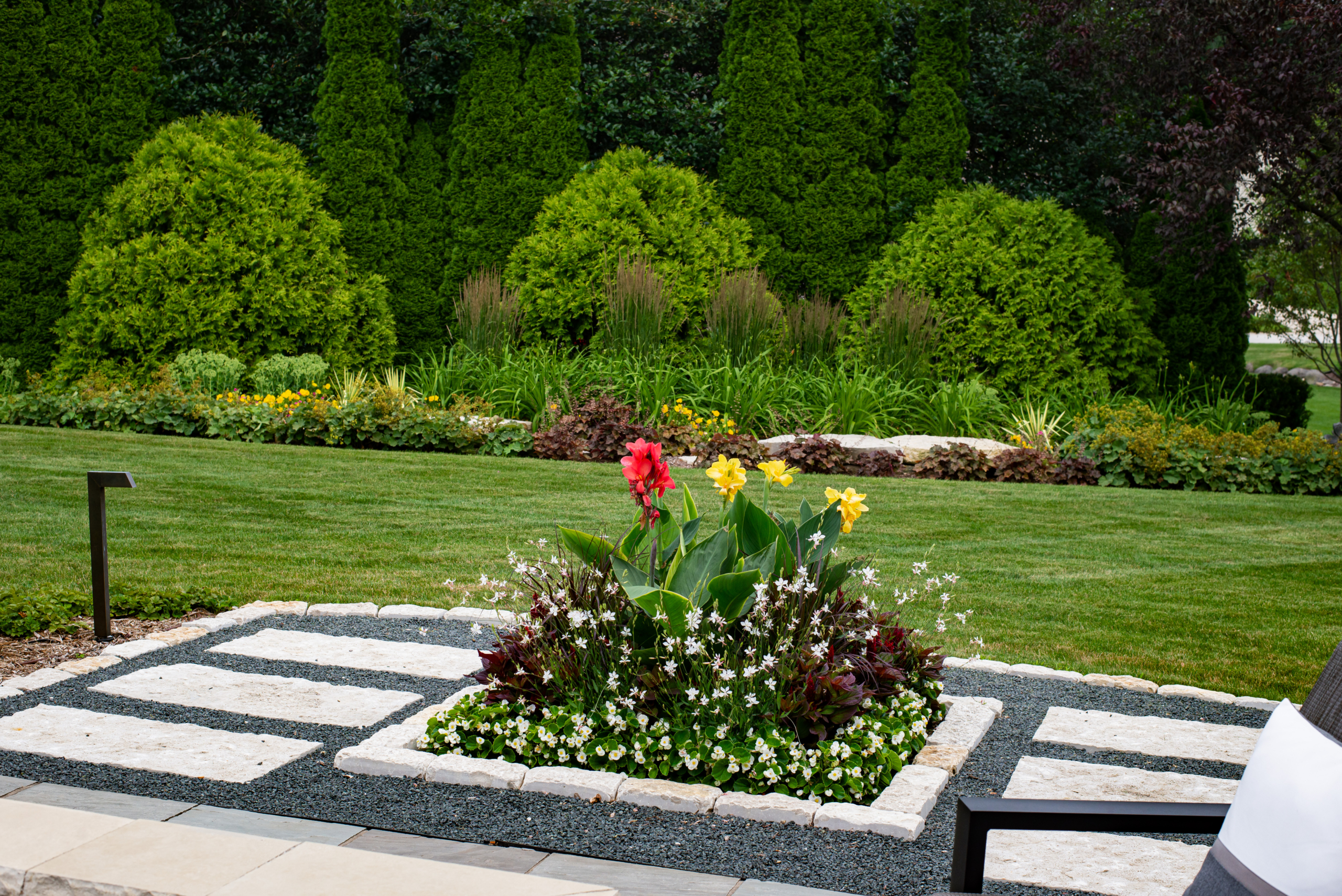
The design challenge, as we saw it, was to create a plan that worked in context with the very symmetrical, modern appearance of the home, yet broke from that rigidity to create a softer, more livable feeling within the outdoor space. With that in mind, the hardscape was organized to highlight the newly-created visual corridor through the center of the home from front to back.

Along this central axis is a front entrance courtyard with a raised central planting bed and over-sized black metal planters planted with rotating seasonal decor.


Paving material selections were intended to blend with the contrasting black and white color scheme on the building exterior. Paving stones were selected to be large so as to contrast with the size of the bricks on the façade. Planting beds were intentionally woven through the space in a very non-symmetrical manner to accomplish the goal of softening the lines. Site furniture was meticulously selected for its combination of modern appearance and ergonomic comfort.

See the full transformation in the video.

Ready to tackle your own landscaping transformation? Get in touch with one of our expert designers today!

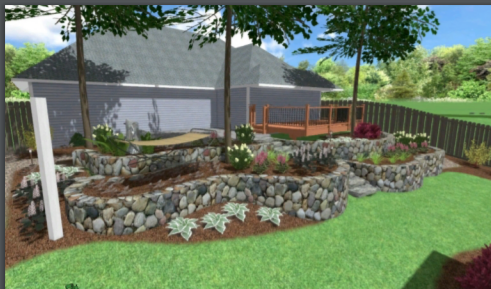
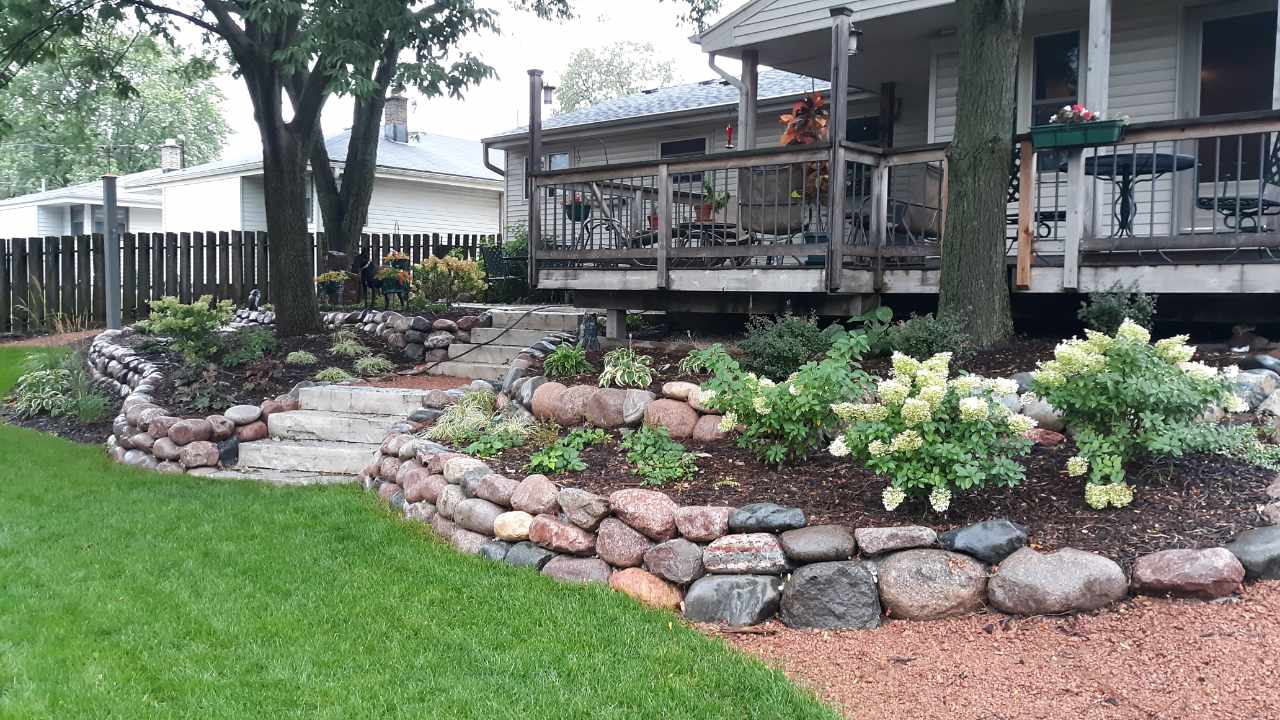
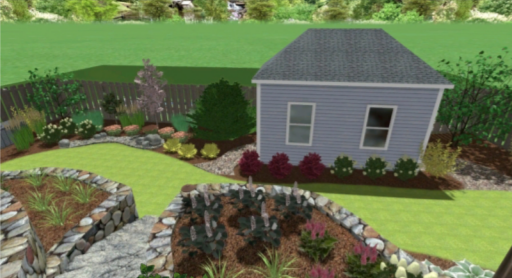
3-D Modeling Helps Clients Visualize Their Landscaping Projects

It can be challenging for clients to envision how their finished projects will look. Often, a 2-D line drawing just does not adequately convey the beauty of the landscaping that our designers have meticulously planned. It is a leap of faith for many clients to trust that the lines and circles they see on a drawing will result in the design they are hoping to achieve.

Hurrah! In 2020, we began using a 3-D modeling software program that has been a game-changer in bridging the gap between design vision and reality for our clients. The process starts off with a plat survey as usual. Then, using the 3-D software we can show a perspective view or even do a video walk-through for our clients. We can pull in a wide variety of hardscape and plant material in the design to show clients exactly what they will receive.  

We’ve seen a few immediate benefits to using the 3-D software with clients. Overall satisfaction has increased since by seeing a design with their own eyes, client expectations match what we deliver. Communication is still invaluable, as we always make sure to temper expectations with the understanding that newly installed plants will not be as full and glorious in the first year of installation.

[one_half]

[/one_half]

[one_half_last]

[/one_half_last]

[one_half]

[/one_half]

[one_half_last]

[/one_half_last]

Another benefit we have found is that cost estimates are generated more quickly and with greater accuracy. The software automatically measures the beds, patios, and other hardscapes so we immediately have accurate square footage for materials.

One of our guiding principles is “Continuously evolve. Find new solutions. Do it better.” Adopting this new software to help clients visualize outcomes during the design phase is a perfect example of how we put this principle into practice.

Our talented designers are ready to help you on your next landscaping project. Schedule an appointment and let’s get started! Call (262) 252-4260 or contact us here.

Winter Landscaping: Planning Your Landscape for Snow Removal

In the immortal words of Ned Stark, “Winter is coming.” You might be rejoicing right now that you no longer have to mow your grass, but pretty soon you’re going to be outside with a shovel or snowblower—and maybe wishing you were pushing a mower instead!

Before the white stuff starts really hits, make sure you and your lawn are prepared for the inevitable snow removal. Here’s how to winterize your landscape so that winter takes a minimal toll on it.

Snow on Driveway leading to home

Protect Your Plants From Salt

Rock salt is an effective snow melting agent, but it can also wreak havoc on your grass and other plants. It can cause your plants to suffer from dehydration and will inhibit their growth once the warmer weather returns. Take precautions to protect those plants now, before the snow starts to fall.

Wrap trees, shrubs, and other plants around the base with burlap or plastic to prevent snow from seeping in. When it comes time to apply salt to your driveway or walkways, take care to keep from strewing it on the grass or plants.

You might also want to cut the salt with sand. This stretches it and dilutes its effect on greenery. Alternatively, switch to sand or kitty litter altogether. These don’t melt the snow and ice as effectively as salt, but they do provide traction on slippery walkways.

Prep Your Property for Snow Removal

If you contract with a plowing service (or even if you do it yourself), mark your driveway with reflective poles. This can prevent your yard from being damaged if the plow operator can’t tell where the driveway ends and the grass begins.

In general, a snowblower is a gentler way to clear snow than shoveling. A snowblower also makes it relatively easy to direct the snow into an area where it won’t cause damage, like the end of the driveway, for example.

If you do shovel, shovel early and often. When you wait until the end of a storm to commence clearing away the snow, it will be harder to remove. A buildup of snow also obscures the dividing line between sidewalk and lawn.

When shoveling, try not to pile the snow onto bushes, shrubs, or grass. Heavy, wet piles of snow damage plants of all types. Sometimes, of course, there’s no other place to pile it. If this is the case with your property, take advantage of sunny spring days by spreading the melting snow evenly across the lawn. That way, no one area risks incurring all the damage.

Don’t Forget Your Hardscaping

Fountains, statues, and outdoor appliances like grills can be damaged by snow and ice. Prevent problems down the line by bringing them inside, if possible, or securing them with heavy plastic or taps.

If you’ve recently had a driveway or walkway makeover, double check that it’s protected by a sealant. It’s also a good idea to inspect paths for loose or uneven bricks or stones, or any type of hole or crack. These can catch shovels’ blades or make for a tripping hazard.

Before the winter hits, take a good look around and patch up any problem areas.

Protect Your Winter Landscaping and Enjoy the Season

Once you have taken precautions to protect your lawn, garden, and hardscaping from damage caused by snow removal, you can sit back and enjoy the winter! Skiing, anyone?

Of course, you can always leave the hard work to the experts and call us for safe, effective snow removal services instead. Contact us today!

How to Choose the Best Cold Climate Plants for Milwaukee Gardens

Planting a beautiful garden in a place like California is a no-brainer. The weather is nice year-round and you can tend to it 365 days a year. The same can’t be said for Milwaukee.

Milwaukee winters are a challenge. Most days have a high below freezing from late November to early March and as little as nine hours of daylight. So, how do you create a beautiful garden? The answer is cold climate plants.

Not sure what plants are suited for Milwaukee’s climate? No problem. Read on to learn everything you need to know!

plants frosted over in the winter

Choose Cold Climate Plants Suited to Your Hardiness Zone

The United States Department of Agriculture produces a map of the US that divides the country up into hardiness zones. These are zones that are optimal for specific plants to grow. It is updated every year to reflect any potential changes in climate throughout the country.

Milwaukee is firmly within hardiness zone 5b. When you consider whether you want to place a plant in your garden, be sure to check its hardiness zone. Most have a range of zones in which they can grow.

So, what plants are best for hardiness zone 5b? A lot!

Perennials

There are plenty of perennials that work very well for zone 5b gardens. A perennial is a plant that lives longer than two years. In fact, most live longer. Perennials that work well in 5b include echinacea, poppy, peony, and lavender for ground cover.

Trees and Shrubs

If you’re looking for seasonal color in your garden, try deciduous trees like the Autumn Blaze maple, Pin oak, or Cleveland Select pear tree. Gingko trees are also a great option, but be sure to look for male trees so you don’t have to deal with a stinky garden.

If you prefer evergreen, plant trees like the Colorado Blue spruce, white pine, or hemlock. Look into juniper, boxwood, or yew for shrubbery.

Go Native

Native gardens are a great way to pay homage to the land on which you live. Native gardens consist of plants, trees, and other vegetation that grows wild where you live. These plants are well adapted to your area, and in fact, thrive there.

In Milwaukee, a native garden means that you have a miniature prairie around your home. These low maintenance plants include grasses like prairie dropseed and little bluestem. For flowers, look for purple coneflower, prairie blazingstar, cream false indigo, and smooth aster.

Native garden bonus: Native gardens are an excellent way to attract wildlife like hummingbirds and butterflies. In fact, they are very beneficial to wildlife that is rapidly losing habitat.

Check Out Our Blog for More Info About Landscaping in Milwaukee

Cold climate plants a great solution for anyone who wants a beautiful garden in Milwaukee. Whether you select plants that are suited to Milwaukee’s climate zone or plants that are native to the area, you’ll end up with a beautiful garden you can be proud of year-round.

Need more tips about gardening in Milwaukee? Check out our blog for information about everything from winterizing your garden to attracting wildlife. Happy gardening!

6 Small Garden Landscaping Ideas for Your Menomonee Falls Garden

Just because your garden is small doesn’t mean that you need to compromise design. While you may not have room for sweeping beds or a grove of trees, there’s plenty of ways to make a tiny garden feel larger.

Keep reading for a few small garden landscaping ideas that can help you do just that.

closeup of someone starting new garden in a plot of dirt

1. Add a Small Greenhouse

If you’re dreaming of raising exotic plants year round but Wisconsin’s cold winters have you thinking twice, a greenhouse is an obvious choice.

Many greenhouses are far too large for a backyard garden that is tight on space. Luckily, there are plenty of miniature versions.

A tall, cabinet-style glass greenhouse allows you to utilize vertical space, which means you won’t be wasting any space you could use for gardening.

2. Extend Your Space With Walls and Tiers

If your backyard doesn’t leave you with much vertical space for creating a garden, you can create your own space using walls and tiers.

Raised beds make it easier to separate your plants and attend to them. Plus, if you create those beds with concrete walls, the walls can double as an easy sitting area for working in or enjoying your garden.

3. Create a Living Wall

If your backyard isn’t even large enough for raised beds, you might think it’s too small for a garden. Think again!

Living walls are one of the latest trends in small backyard landscaping ideas. They utilize wooden planters stacked vertically along a wall.

Once your wall is in place, you can use creeping or draped plants to give your stacked garden a more natural look. Or use it to grow herbs for a simple, space-saving kitchen garden.

4. Give Yourself a View

When you’re perusing landscaping ideas for small yards, you’ll find plenty of ideas for creating plots or choosing the right plants. But none of those tips will be any good if you don’t also create a space for yourself to enjoy your garden.

When you’re plotting your landscaping design for small yards, be sure to put a focus on integrating a seating area. Position it so that you can see a large part of your garden.

5. Paint Exterior Walls White

One simple tip for making your backyard garden look and feel larger is to minimize distraction.

Dark or even lighter patterned exterior walls can draw eyes away from your garden, making it look even smaller. To minimize this effect, paint exterior surfaces white.

6. Use Lines to Create an Illusion

While a professional gardener will have a number of tactics to landscape small backyards and make them look larger, there are a few you can utilize on your own. For instance:

  • Plants arranged in clean, straight lines can help lend the illusion that a space is larger than it is.
  • Use your space to create the longest possible line with your plants to make your space look as large as possible.

Putting Small Garden Landscaping Ideas to Work

While these small garden landscaping ideas are great for making the most of your space, a professional landscaping service is able to do much more.

With the right tools and know-how for maximizing any garden, pros can help you create a space that looks and feels much bigger than it really is.

Contact us today to see how we can make a difference in your backyard. We offer garden design in Menonomee Falls and Milwaukee.

Want to stay in the loop?
Sign up for our newsletter.

"*" indicates required fields

This field is for validation purposes and should be left unchanged.
Name*

American Landscape - 50 Years of Outstanding Landscaping Service to the Greater Milwaukee Area

(262)252-4260

N60 W16073 Kohler Ln,
Menomonee Falls, WI 53051