Tag Archive for: landscape design

How to Design a Small, Intimate Outdoor Space

One of the biggest misconceptions in outdoor design is that a larger space automatically creates more opportunities. In reality, some of the most inviting outdoor spaces are also some of the smallest. A small patio, courtyard, or side yard doesn’t need room for every possible activity. It just needs a clear purpose. Without one, these areas often become cluttered or neglected. The space exists, but it doesn’t get used.

Good design solves this problem. Rather than questioning what fits into a space, good design should ask ‘what experience should the space itself provide?’

Every decision that follows, from the layout and plantings to the hardscape materials and lighting, should support the answer. When all elements work together, even a modest outdoor area can feel welcoming, functional, and complete.

Design a Small Outdoor Space in 5 Steps

Designing a small outdoor space isn’t about squeezing in as many features as possible. It’s about making thoughtful choices that support how you want to use the space.

These five steps can help create an outdoor area that feels comfortable, functional, and inviting, regardless of its size.

Step 1: Decide How the Space Will Be Used
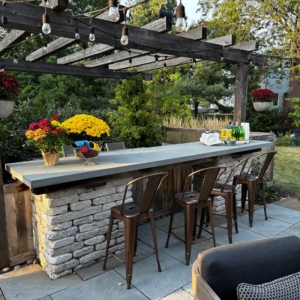
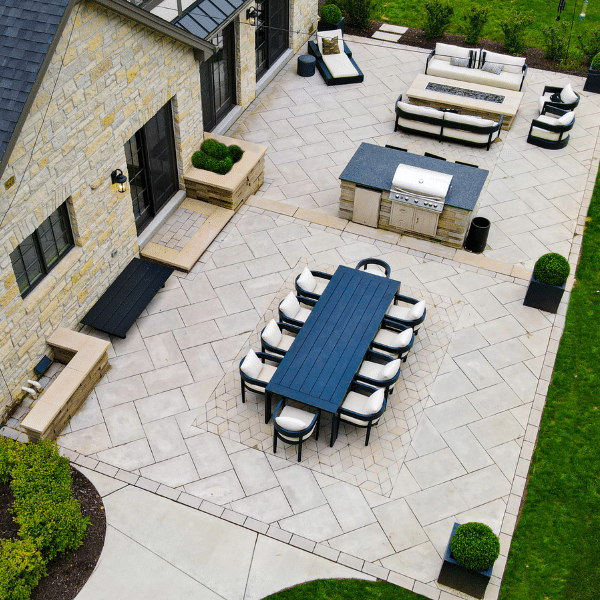
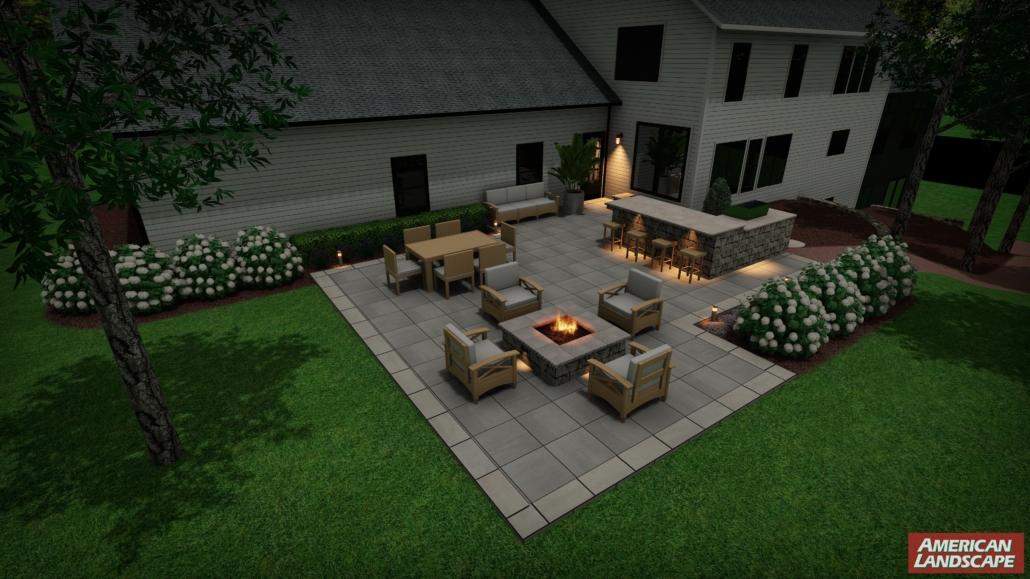
Landscape Design for Small Spaces - Outdoor Kitchen and Pergola

Before selecting furniture, plants, or materials, start by answering one simple question: What is this primary purpose of this space?

Many homeowners make the mistake of trying to design a small outdoor area for every possible activity. Homeowners may want:

  • a dining space
  • a conversation area
  • a reading nook, and
  • a room for entertaining.

In a limited footprint, this approach often leads to compromises that leave the space feeling crowded and uncomfortable.

Instead, choose one primary purpose for the space and let that decision guide everything that follows.

Maybe it’s a quiet place to enjoy a morning cup of coffee.

Perhaps it’s a comfortable spot to read a book on a summer afternoon or an intimate setting for sharing a meal with a partner.

Once the purpose is defined, many of the design decisions become much easier. You’ll have a better sense of how many seats you actually need, whether a table or lounge seating makes more sense, and how closely the space should connect to the house or kitchen.

Step 2: Plan a Layout for a Small Outdoor Space

After defining the space’s purpose, the next step is creating a layout that supports it.

In a small outdoor space, flow is often more important than symmetry. A perfectly balanced layout may look appealing on paper, but if it interrupts movement or makes the area feel cramped, it won’t be comfortable to use.
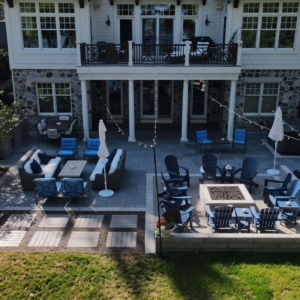
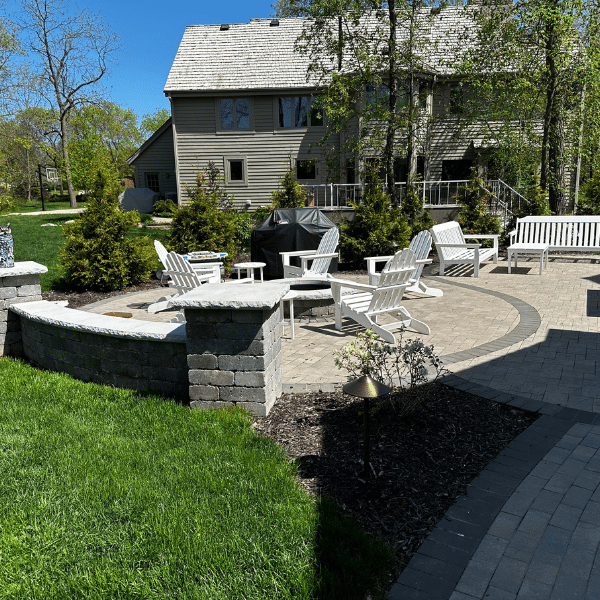
Landscape Design for Small Spaces Patio and Fire pitThe most successful layouts create a natural connection between the house and the outdoor living area. People should be able to move comfortably through the space without having to navigate around furniture, planters, or other obstacles. The seating area should feel intentional and distinct, not just placed wherever space allows.

This is often where homeowners run into trouble. Furniture gets pushed against the house, features are added without considering how people move through the area, and the space begins to feel crowded despite its limited footprint.

A thoughtful layout creates a sense of order. It gives each element a purpose, keeps circulation open, and helps the entire space feel more comfortable to use.

Step 3: Use Plants for Structure, Privacy, and Texture

Every plant should serve a purpose. The most successful designs use plantings to create structure and privacy while also adding texture, color, and seasonal interest. The goal is to create layers without making the area feel crowded.
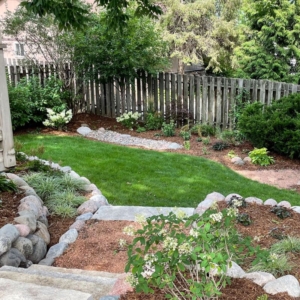
Landscape Design for Small Spaces 3A simple planting strategy often works best:

  • Use tall, narrow plants along fences and property lines to add height without consuming valuable square footage. Columnar shrubs, espaliered trees, and trellised vines can all help create a sense of enclosure and provide privacy.
  • Add mid-sized shrubs or ornamental grasses around patios, walkways, and seating areas to soften the edges of hardscape surfaces.
  • Incorporate low-growing perennials or groundcovers near seating areas to provide texture and seasonal interest without blocking views or pathways.

Vertical elements can be especially valuable in compact spaces. Wall planters, climbing vines, decorative trellises, and lattice features help draw the eye upward, creating the impression of a larger outdoor room.

When selecting plants, resist the urge to include a little bit of everything.

Repeating a smaller number of plant varieties often creates a calmer, more cohesive appearance than filling the space with numerous unrelated selections.

Step 4: Pick Hardscape Materials That Visually Expand the Small Outdoor Space

Hardscape materials do more than provide a surface underfoot.

They also influence how large, open, and comfortable a space feels. In many cases, lighter colors and simpler patterns create a calmer appearance and can make an area feel more spacious than it actually is.

A few design principles can help:

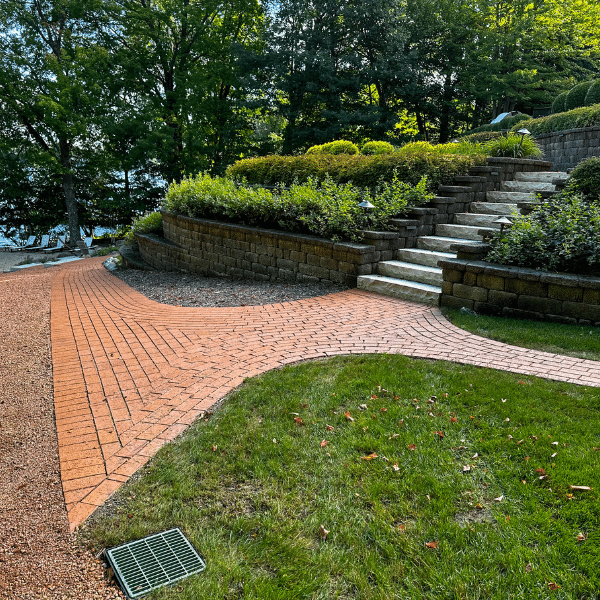
  • Use one primary patio material whenever possible. Multiple contrasting surfaces can make a small area feel busy and visually fragmented.
  • Choose paver or stone patterns that guide the eye through the space. Running materials lengthwise can help create a greater sense of depth.
  • Keep joint lines, borders, and accents simple. Too many decorative bands, inlays, or pattern changes can overwhelm a compact footprint.

Strategic hardscape upgrades can also have a significant impact.

Replacing aging, patchy concrete with a unified patio surface often creates a cleaner, more cohesive look. In some cases, extending a patio by just a few feet can provide enough room for more comfortable seating and better circulation without dramatically changing the overall footprint.

Simple, consistent material choices often create a stronger result than adding more patterns, borders, and decorative details.

Step 5: Layer Lighting to Create an Intimate Atmosphere

A well-designed outdoor space shouldn’t disappear when the sun goes down.

Thoughtful lighting can help extend its use into the evening while creating a warm, inviting atmosphere.

A simple lighting plan often includes three layers:

  • Safety: Low-level path or step lights near doors, walkways, and transitions.
  • Ambiance: String lights, lanterns, wall sconces, under-bench lighting, or paver lights that create a warm glow throughout the space.
  • Accent: A few focused fixtures that highlight a feature tree, trellis, planting bed, or seating area.

When it comes to outdoor lighting, less is often more. Softer light levels tend to feel more comfortable and intimate than bright floodlights. Timers and smart controls can make the space even easier to enjoy by automatically turning on the lights as evening approaches.

Design Your Small Outdoor Space with American Landscape

Creating an inviting outdoor space isn’t about having more room to work with. It’s about making thoughtful decisions that support how you want to use the space. When the layout, plantings, hardscape materials, and lighting all work together, even a small patio, courtyard, or side yard can become a favorite place to spend time.

The team at American Landscape can help you make the most of every square foot by designing outdoor spaces tailored to your property, lifestyle, and goals.

Contact us to schedule a design consultation and explore what’s possible for your outdoor space.
 

Looking Beyond What’s There: Renewing and Renovating Outdoor Spaces

Some of the most rewarding landscape projects are not brand-new homes with empty lots and unlimited possibilities. They are the homes that have been lived in for years, sometimes decades, with outdoor spaces that have changed right along with the family.

These are the yards with mature trees, overgrown shrubs, patios that are starting to show their age, and planting beds that no longer fit the way the homeowners want to use the space. Often, homeowners know what is not working anymore, but they have a hard time picturing what the landscape could become.

That is where thoughtful landscape renovation comes in.

At American Landscape, these projects are some of our favorites because they require more than simply installing new plants or replacing hardscapes. They require creativity, experience, and the ability to look past what currently exists to uncover the potential underneath it all. After more than 50 years designing and building landscapes throughout greater Milwaukee, Waukesha County, and Lake Country, we have learned that transforming an existing landscape into something fresh, functional, and beautiful is both challenging and rewarding.

Seeing What is Already There

When we walk a renovation project for the first time, we don’t just look at the yard as it currently stands. We look at what it could become.

That means reading the bones of the property: the mature trees that took decades to grow, the established grade, the drainage patterns, and the walls or walkways that still have structural life left in them. A skilled landscape designer treats these existing elements the way a good architect treats original woodwork. These are features worth preserving, restoring, or working around rather than simply ripping out.

It also means listening carefully to the homeowner. We want to hear more than just a wish list for a fire pit, a pergola, or updated planting beds. We want to know the story behind the change. What is driving the project? Is a teenager heading off to college, allowing you to reclaim the space? Do you want to entertain more? Or are you finally able to invest in the yard that has always been “next year’s project”?

That context shapes everything we do.

Why Landscape Renovations Are More Complex

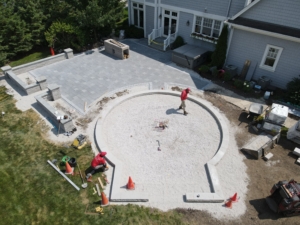
Pewaukee Nightscape Patio & Fireside Retreat - Before Hardscape Renovation

On a new construction project, there are no decades-old arborvitae blocking sightlines, no original fieldstone retaining walls you want to save, and no perennial beds planted by a family member years ago.

A remodel may have any or all of those things. That is precisely what makes it harder, and much more interesting!

Our design team addresses several key questions on every remodel project:

  • What can be salvaged and repurposed? A patio may be failing, but the base material might be perfectly reusable. Mature plantings can often be relocated rather than thrown away.
  • What is worth the cost to keep? Removing a well-established tree would be expensive and it would be a massive loss to the property. We always look for ways to design around significant trees.
  • How do we ensure compatibility? New hardscapes should complement the existing home’s exterior style, and new plantings must match the light and soil conditions already established on the site.
  • Can we phase the work? Sometimes the best renovation happens in stages. A clear long-term plan ensures Phase 1 sets up Phase 2 beautifully to respect your budget.

Maximizing Value Without Overspending

One of the most common questions we hear during a remodel conversation is: “How do we know what we actually need to replace versus what we should keep?”

Our approach always begins with a thorough site assessment before we draw a single line. We evaluate the health of existing trees and plantings with our designers and horticulturists, check the condition of hardscapes, analyze grading and drainage, and look at how the layout fits the way your family actually uses the space.

From there, the design is not simply about following trends. It is about doing what is right for your yard, your home, and your family.

A Yard That Fits Your Home

The highest compliment we receive after a renovation is not that the space looks totally transformed. It is when a client says, “It feels like it was always supposed to look this way.”

That is the ultimate goal. A great landscape renovation does not erase the history of a yard. Instead, it honors that history while making the space function better for modern life. The mature maple stays, the new porcelain patio feels natural to the landscape, and the refreshed plantings complement what has been thriving there for years.

This work takes patience, skill, and a designer who can see past the overgrowth to find the potential underneath. That is the exact approach we have brought to properties in neighborhoods like Mequon, Elm Grove and all across Lake Country since 1973.

If your yard is ready for its next chapter, we would love to take a walk with you.

Ready to rethink your landscape? Contact American Landscape for a design consultation. We will assess what you have, listen to your vision for the space, and build a plan that delivers.


Transforming Outdoor Spaces: Our Hardscape Design & Build Process

With 50 years of experience serving the greater Milwaukee and Waukesha County areas, our landscaping company specializes in creating stunning, functional outdoor spaces. Our hardscape design and build process ensures that your vision comes to life with precision, creativity, and craftsmanship.

Step 1: Free Consultation

Every great project starts with a conversation. We meet with you to discuss your goals, style preferences, and how you want to use your outdoor space. Whether it’s a patio, walkway, retaining wall, or full backyard transformation, we listen to your ideas and assess the site.

Step 2: Vision & Planning

Using your input, our designers develop ideas that blend aesthetics with functionality. We incorporate materials, textures, and layouts that complement your home and landscape.

Step 3: 3D Modeling & Design

To ensure you can fully visualize the final product, we can create a detailed 3D model of your project. This advanced tool allows you to see different design options, make adjustments, and feel confident before construction begins.

Step 4: Estimate & Build

Once the design is finalized, we provide a clear estimate and timeline. Our expert team then brings the vision to life, delivering high-quality craftsmanship that enhances your outdoor living space for years to come.

Ready to start your hardscape project? Let’s create something beautiful together!

Contact us at https://amerlandscape.com/contact/ or call 262-252-4260.

30-Year Dream Backyard Becomes Reality

This project started off as a dream of the client’s late wife.  For years she had wanted to transform their backyard into a retreat.  After her passing our client felt a pressing need to bring this 30-year dream to life in memory of her.  

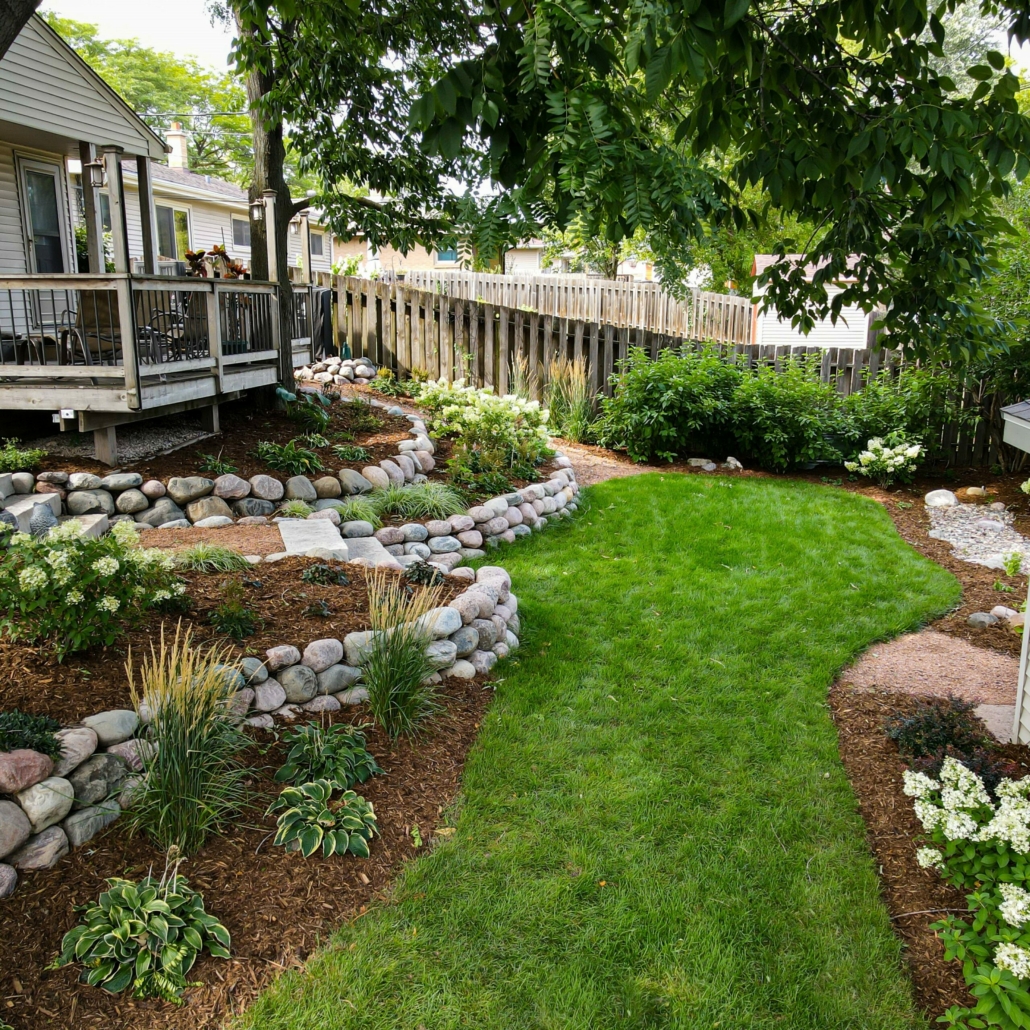
The backyard had major drainage and erosion issues.  The decaying timbers were becoming dangerous for the grandkids and the client’s dog.  There was no safe way to get down to the lower level of the yard and to the shed.  The client gave us an open slate as he felt he could not put a price on this memorial for his wife.  

The client’s requirements for the project included a water feature to minimize the noise of the freeway, replacing the walls, adding steps to make the lower level accessible, solving the major drainage issues, and bringing in color. 

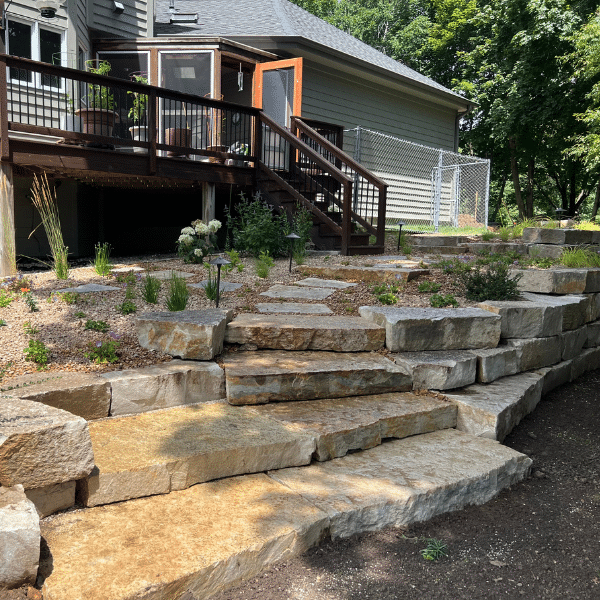
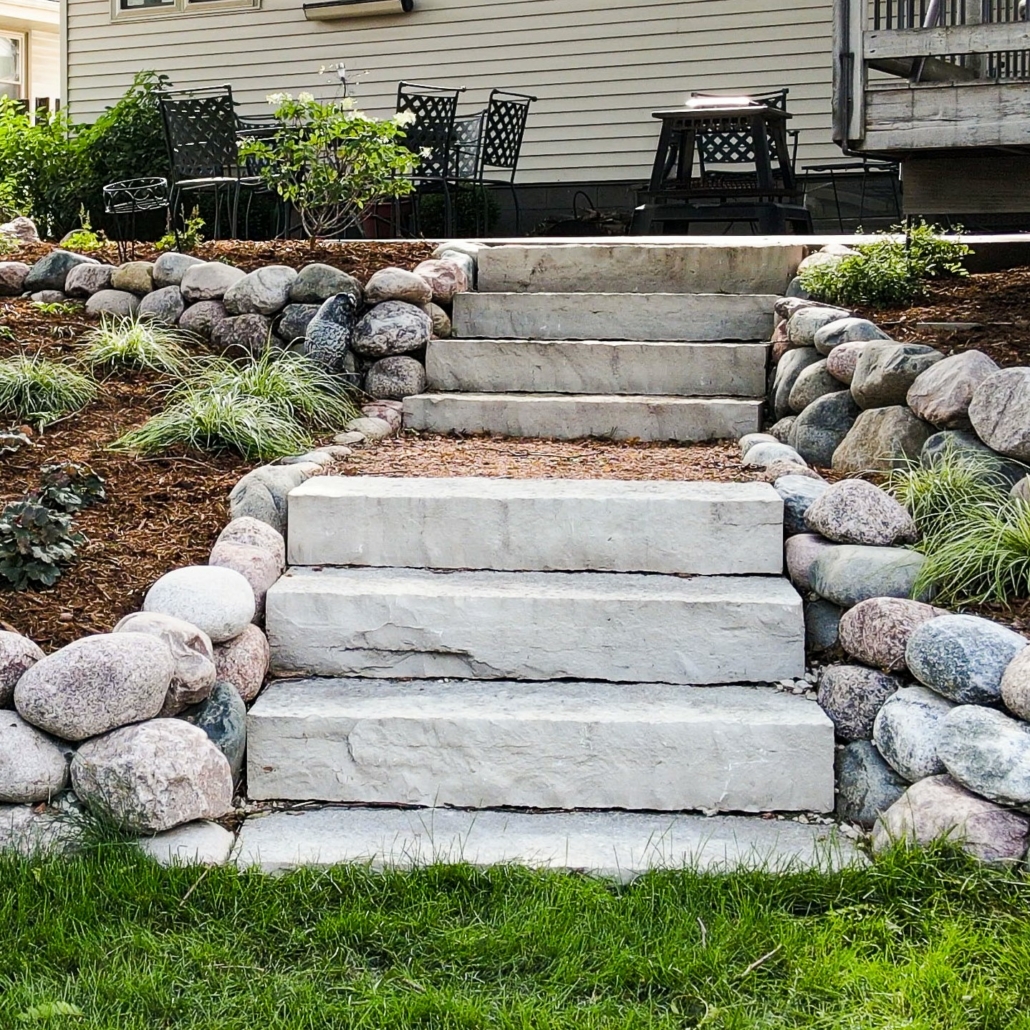
Fieldstone was chosen for the walls to go with the natural design of the house.  The walls terrace the landscape to solve the erosion while creating multiple planting areas.  Lannon stone steps were installed to make a beautiful and safe transition to the multiple levels of this landscape.

We were challenged by narrow access to the yard because of the privacy fence, so we needed to remove fence panels to get into the yard.  The 5 cubic yard drywell was installed to mitigate the drainage issues in the lower level.  All drainage in the back yard comes to this area, and it handles it with ease.  


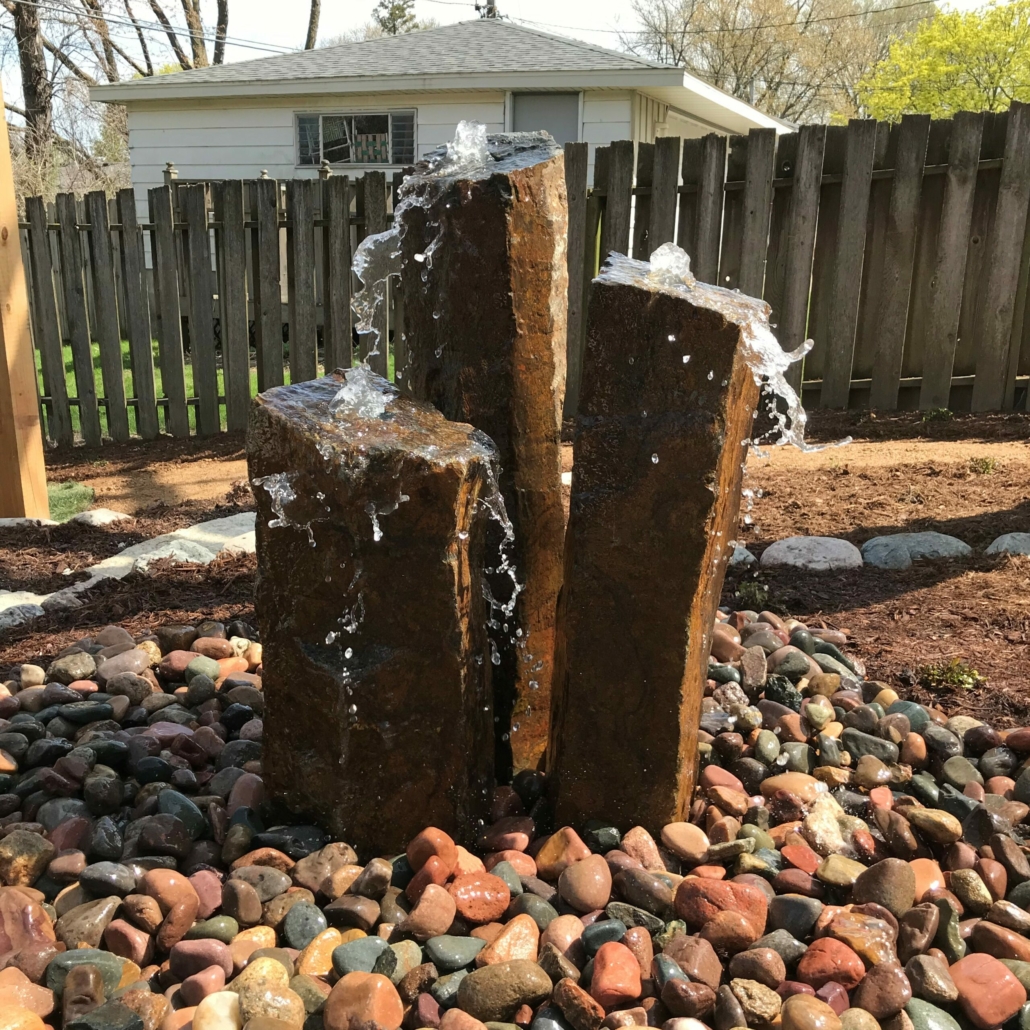
The basalt columns water feature was chosen for it’s natural appearance which blends in with the other features of the home and landscape.  The pond-less aspect was chosen to be child and dog friendly, as well as being low maintenance.  Landscape lighting brings this to life late into the evening and it can be viewed from multiple windows in the home.   

A hammock was added to this project so the client could enjoy afternoon naps and catch up on some reading.  It is the perfect location to enjoy the entire back yard while listening to the sound of water cascading down the centerpiece of this landscape.    

The plantings were chosen to be tough enough to handle the dog traffic and able to thrive with only having filtered sun due to the large overhead trees.  The mix of textures and newly installed sod give this lush backyard retreat its finishing touches.  

Do you have a dream in mind for your own landscape? Get in touch today to connect with one of our talented landscape designers. 262-252-4260

Want to stay in the loop?
Sign up for our newsletter.

"*" indicates required fields

This field is for validation purposes and should be left unchanged.
Name*

American Landscape - 50 Years of Outstanding Landscaping Service to the Greater Milwaukee Area

(262)252-4260

N60 W16073 Kohler Ln,
Menomonee Falls, WI 53051