Fall Tree Care in Southeast Wisconsin: What Certified Arborists Recommend
Fall brings a familiar transformation to landscapes across Southeast Wisconsin. The air turns crisp, and deep green leaves shift to brilliant shades of red, orange, and yellow. Soon, leaves are collecting across lawns and driveways, and bare branches begin to show through the canopy. Amid all that seasonal change, fall is also a good time to take a closer look at the health and condition of your trees.
Trees throughout Waukesha County and the greater Milwaukee area face a range of conditions each year. Dry weather, heavy rain, storms, insects, and disease can all take a toll. By fall, some of that stress may begin to show.
Fortunately, fall tree care doesn’t have to be complicated. A few timely steps can help support healthy trees and identify potential concerns. Knowing what to look for can also help you recognize when it’s time to call a Certified Arborist.
4 Fall Tree Care Priorities for Southeast Wisconsin
Every tree responds differently to the conditions around it. Age, species, location, and overall health can all influence what a tree needs. The conditions it experienced throughout the growing season matter, too.
With that in mind, focus on these four fall tree care priorities.
1. Make Sure Trees Have Enough Water This Fall
Think back on the weather your trees experienced over the past several months. Long dry stretches, heavy rain, and high temperatures can all affect soil moisture and tree health. What one tree handles well may cause stress for another.
Pay particular attention to newly planted and younger trees, evergreens, and trees that experienced dry conditions earlier in the year. If rainfall has been limited, feel the soil a few inches below the surface near the tree’s root zone. Soil that feels dry rather than cool and moist may indicate that additional water is needed.
When watering, focus on the soil in the root zone rather than simply wetting the area around the trunk. Water slowly enough for moisture to soak into the soil rather than run across the surface.
2. Protect the Root Zone With Proper Mulching
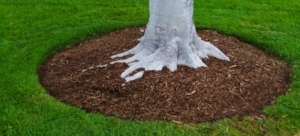 A layer of mulch does more than give the area around a tree a finished look. Proper mulching can help retain soil moisture, moderate soil temperatures, and reduce competition from weeds. It can also protect trees from accidental damage caused by mowers and string trimmers.
Take a look at how mulch is sitting around the base of the tree. You should still be able to see where the trunk begins to widen as it meets the ground. If mulch is piled against the trunk or covering this area, pull it back so it is not touching the bark.
3. Inspect Trees While You Can Still See the Canopy
Changing leaves and eventual leaf drop are expected in the fall. What matters is noticing when something seems out of the ordinary. Stress from insects, disease, storms, or other conditions during the growing season may also become more noticeable.
Before the leaves are gone, step back far enough that you can see the entire canopy. Compare one side of the tree with the other. Look for sections that appear noticeably thinner, discolored, or different from the rest.
Also watch for bare sections or leaves dropping much earlier in one part of the tree. Changes in leaf color, appearance, or early leaf drop can sometimes be associated with common tree diseases.
One symptom alone does not necessarily mean your tree is unhealthy. Pay attention to where the change is occurring and whether it appears isolated or widespread throughout the canopy.
If something looks unusual, knowing the signs that your trees may need a Certified Arborist can help you decide when it is time for a professional evaluation.
4. Look for Dead, Damaged, or Problematic Branches
Strong storms and other conditions throughout the growing season can leave behind damage. Some of those concerns may become easier to notice as leaves begin to fall.

Take a few steps back and look beyond the leaves to the branches themselves. Watch for broken or hanging limbs, deadwood, visible cracks, or branches that rub or cross one another.
Then consider where those branches are growing. Limbs extending over your home, driveway, walkways, or outdoor living areas deserve a closer look if they appear damaged or structurally questionable.
Crowded, poorly positioned, or damaged branches can also become larger concerns as a tree continues to grow. Proactive tree pruning can help address these branches before they create bigger problems for the tree or surrounding property.
Keep your inspection at ground level. If you have larger trees or safety concerns, it’s best to have a trained tree care professional evaluate them. Avoid inspecting or reaching for any questionable branches on your own.
Should You Prune Trees in the Fall?
After spotting dead, damaged, or crowded branches, you may be tempted to grab the pruning shears. But fall does not automatically mean it is the right time to prune every tree.
The best time to prune depends on the tree species, its condition, and why the branch needs to be removed. A dead or hazardous limb may require a different approach than routine pruning intended to improve the tree’s structure.
Oaks require particular care in Wisconsin. To help reduce the risk of oak wilt, avoid pruning oaks during periods when the disease is most likely to spread. Proper timing can help protect healthy trees from unnecessary exposure.
The key is not to assume every branch you notice during a fall inspection needs to come down right away. A Certified Arborist can evaluate the tree and determine whether pruning is appropriate based on its health, structure, and species.
Fall Tree Care with American Landscape
A little attention this fall can go a long way toward keeping your trees healthy. It can also help you catch concerns before they become bigger problems.
If something doesn’t look right, you don’t have to figure it out on your own. American Landscape’s Certified Arborists can assess the health and condition of your trees and recommend the right care for your property.
Contact American Landscape to schedule a tree assessment and give your trees the professional care they need this fall.